


Healthcare and Education Infrastructure Reshaping Southern Hanoi’s Urban Landscape
Southern Hanoi is entering a pivotal phase of transformation as a series of major social infrastructure projects in healthcare, education, and housing are rolled out simultaneously. No longer merely a peripheral or satellite area, the southern part of the capital is gradually taking shape as a new urban hub - one that attracts high-quality human capital, delivers modern services, and generates long-term growth momentum for the expanded Hanoi metropolitan area. The establishment of two major central-level hospitals, alongside plans to relocate leading universities to the city’s outskirts, has created a “dual catalyst” effect. This development not only enhances quality of life but also drives sustainable socio-economic growth. In this context, healthcare, education, and housing have emerged as three key pillars shaping the new urban landscape of Southern Hanoi in the next development phase.

Attracting High-Quality Medical and Educational Talent
Following the imminent operation of Bach Mai Hospital and Viet Duc Friendship Hospital (second campuses), investment flows into education infrastructure in Southern Hanoi have intensified significantly. On March 25, a delegation from the National Economics University conducted an on-site survey and working session at the Nam Cao University Area to explore plans for developing a new campus. Previously, major institutions such as Bach Mai Hospital and Hanoi University of Transport and Communications had also proposed establishing second campuses in this area.
Notably, to meet staffing demand for Bach Mai Hospital’s second campus - designed with approximately 1,000 beds and serving an estimated population of 20 million people from Ha Tinh northward - Bach Mai University of Medicine and Pharmacy is developing a multi-disciplinary health sciences university model. Spanning roughly 28 hectares within the Nam Cao University Area, the project is expected to enroll between 5,000 and 7,000 students, becoming a major source of high-quality medical professionals for Northern Vietnam.
According to experts, the simultaneous relocation of leading universities and central-level healthcare facilities to Southern Hanoi not only addresses workforce shortages in healthcare and education, but also serves as a powerful catalyst for urbanization. The influx of highly skilled professionals is driving demand for housing, services, and modern urban amenities, laying the groundwork for the area’s transition from a supporting zone to a new growth center of the expanded Hanoi Capital Region.
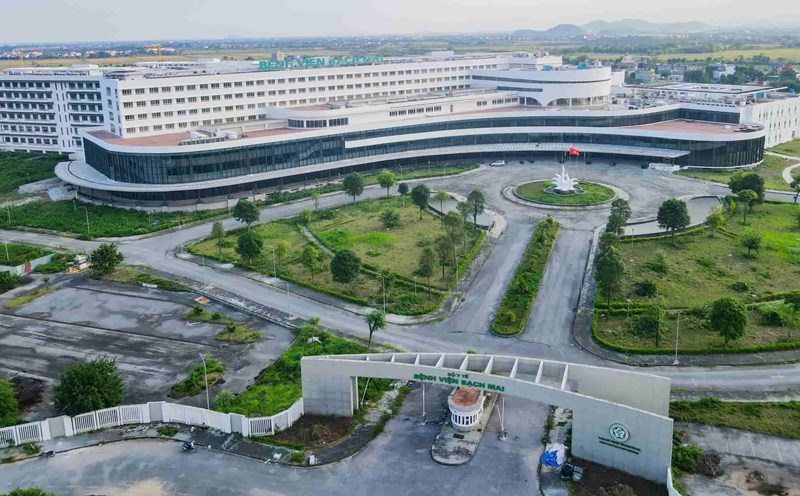
Bach Mai Hospital (Second Campus) is set to begin operations (Source: Collected).
Expanding the Scale and Urban Structure of Southern Hanoi
The rapid development of education infrastructure in Southern Hanoi aligns closely with national strategic directions. Under the Education Development Strategy to 2030, with a vision to 2045 - approved by the Prime Minister in January 2025 - the relocation of higher education institutions from inner-city areas is identified as a key priority to ease urban congestion and unlock new development space.
Within this context, the Nam Cao University Area is considered a strategic initiative that anticipates the relocation wave of major universities from Hanoi. Located across Duy Tien Town and Phu Ly City, the project has a total investment exceeding VND 19 trillion and, after adjustments, covers approximately 9 square kilometers. Once completed, it is expected to accommodate 50,000–80,000 students, positioning itself as a new “knowledge valley” in Southern Hanoi.
Alongside the rapid growth of human capital across industries such as manufacturing, healthcare, education, tourism, and services, urban and transport infrastructure has also been developed in parallel. During the 2021–2025 period alone, total investment in transport infrastructure is estimated at VND 13.6 trillion, accounting for 34% of total construction investment. A comprehensive internal and inter-regional connectivity network—encompassing road, rail, waterway, and air transport—is gradually taking shape, clearly defining a modern and dynamic urban landscape in Southern Hanoi.
Modern Housing and Urban Development Complete the Growth Equation
Beyond healthcare and education, housing plays a pivotal role in Southern Hanoi’s urban development strategy. In late March, a social housing project within the Sun Urban City mega-urban complex officially broke ground, marking a significant milestone in completing the area’s urban ecosystem.
The project aims to deliver approximately 12,000 high-quality social housing units, integrated with comprehensive amenities including parks, public squares, schools, hospitals, and commercial centers. This initiative not only provides affordable housing for residents and high-skilled workers, but also reflects a people-centric, forward-looking urban planning approach focused on sustainability.
Sun Urban City - a resort-style mega-urban development by Sun Group—is directly connected to the Nam Cao University Area and is gradually shaping a vibrant “university city” model at the southern gateway of Hanoi. As the Nam Cao University Area is poised to become a new knowledge hub, combined with smart hospital operations at the central-level healthcare facilities, the region has strong potential to emerge as a leading medical, education, and service center in Northern Vietnam.
Under the master plan, infrastructure serving the Nam Cao University Area is being developed with an investment of nearly VND 1 trillion, covering a total length of 13.6 kilometers. This network closely links key industrial zones, Phu Ly City, and major national highways. Such synchronized infrastructure not only drives provincial development but also acts as a powerful regional connector, strengthening ties with Hanoi, Ninh Binh, Nam Dinh, and the broader Red River Delta.
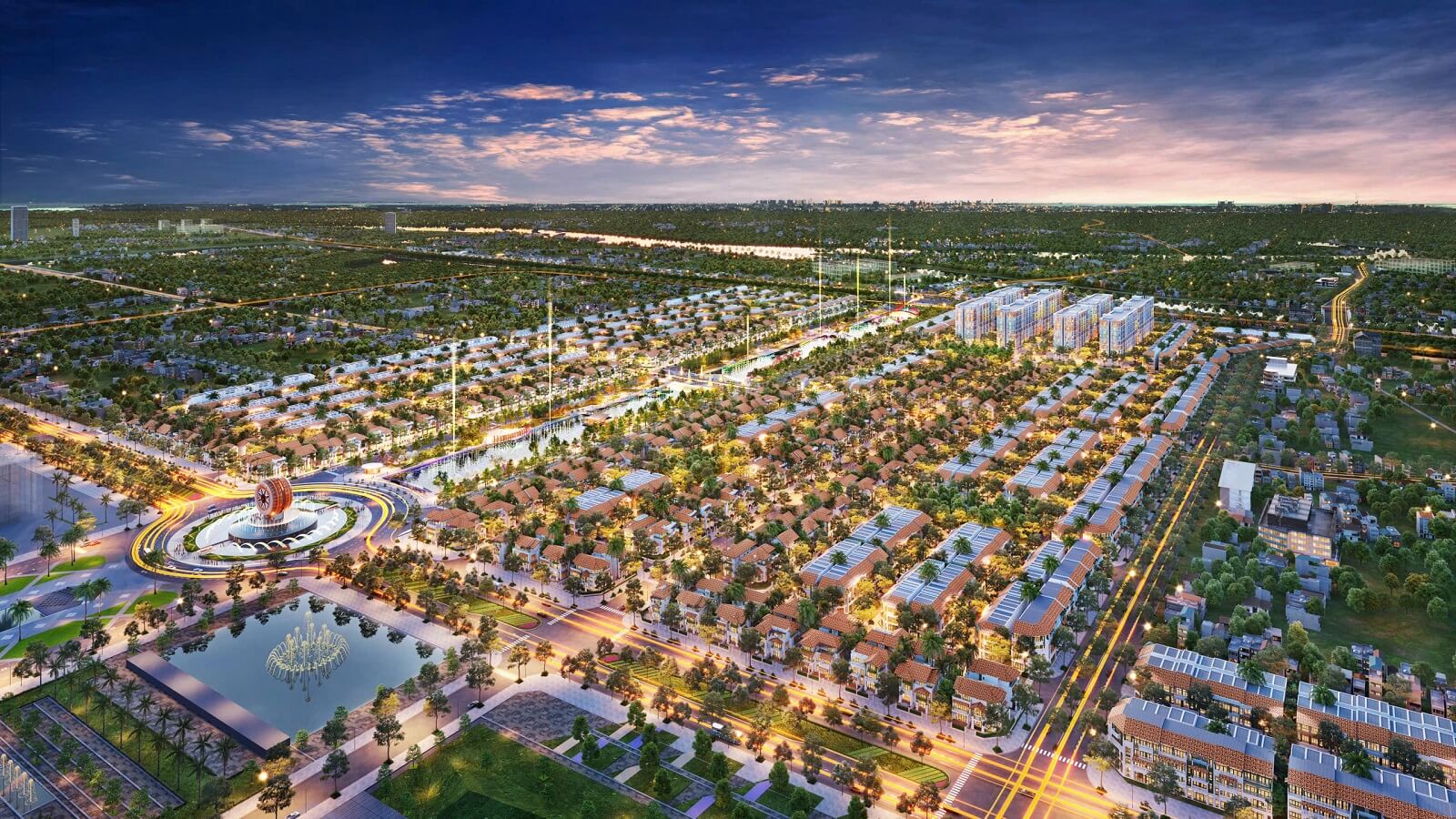
Sun Urban City stands out in the heart of Ha Nam.
Strategic Vision and Regional Ambitions for Southern Hanoi
Local authorities have repeatedly articulated their ambition to transform Southern Hanoi into a new economic, commercial, and social hub of Northern Vietnam. Benefiting from its proximity to Hanoi and its position along major transport corridors such as the Phap Van–Cau Gie–Ninh Binh Expressway, National Highway 1A, the North - South railway along with upcoming projects like Ring Road 5 and key intra-regional links, the area is steadily evolving from a satellite zone into a multi-sector development and logistics node.
The synergy between transport infrastructure, education, healthcare, and modern urban development has created a rare competitive advantage, clearly shaping Southern Hanoi as a new investment magnet - particularly for high-tech industries, supporting manufacturing, education, and resort tourism.
With abundant land availability, incentive mechanisms, a business-friendly environment, and proactive local governance, Southern Hanoi is emerging as a highly promising destination for both domestic and international investors, ushering in a new phase of sustainable and long-term growth.